Service
Back-End
Developer
An application's reliability is mostly decided server-side. As a freelance back-end developer, I design the architecture, database and APIs that power your application — built to hold up over time, not just for the demo.

What I build on the back-end
From a standalone API to a complete application architecture, with constant attention paid to security and scalability.
Server & database architecture
Data modeling, choice of DBMS (relational or non-relational), indexing and optimized queries that stay fast as the volume grows.
REST APIs & authentication
Documented (OpenAPI), versioned endpoints with JWT or OAuth 2.0 authentication and fine-grained role and permission management.
Integrations & data processing
Payments, transactional emails, webhooks, bulk imports/exports, scheduled jobs — everything that runs server-side without manual intervention.
Deployment & scalability
Production deployment on VPS or cloud, CI/CD, monitoring and error logs. An architecture that absorbs increased load without a rewrite.
A proven back-end stack
Tools proven in production, chosen for their reliability and their ability to scale.


My process
Analysis of the business need, database modeling and endpoint definition. Deliverable: OpenAPI specification and a firm estimate.
Authentication, database structure and the first critical endpoints are built first, to validate the architecture before scaling it up.
Endpoints delivered continuously to a staging environment, with OpenAPI documentation kept up to date with every release.
Production rollout, load testing on critical points, technical documentation and handover. Available for post-launch follow-up.
Why a freelance back-end developer instead of a team?
Architecture decisions owned by one person
Structural choices (data modeling, security, scalability) are made and documented by the person writing the code, with no dilution across multiple contributors.
Documented and tested API
Every endpoint ships with OpenAPI documentation and tests on the critical paths. A front-end team can integrate it without needing you as a go-between.
Security taken seriously from day one
Robust authentication, input validation, secrets management — the fundamentals that prevent bad surprises in production, not bolted on afterward.
Dual back-end & front-end skill set
I also work as a front-end developer, so I can deliver the API and the interface that consumes it without bringing in a second provider.
Back-end projects delivered
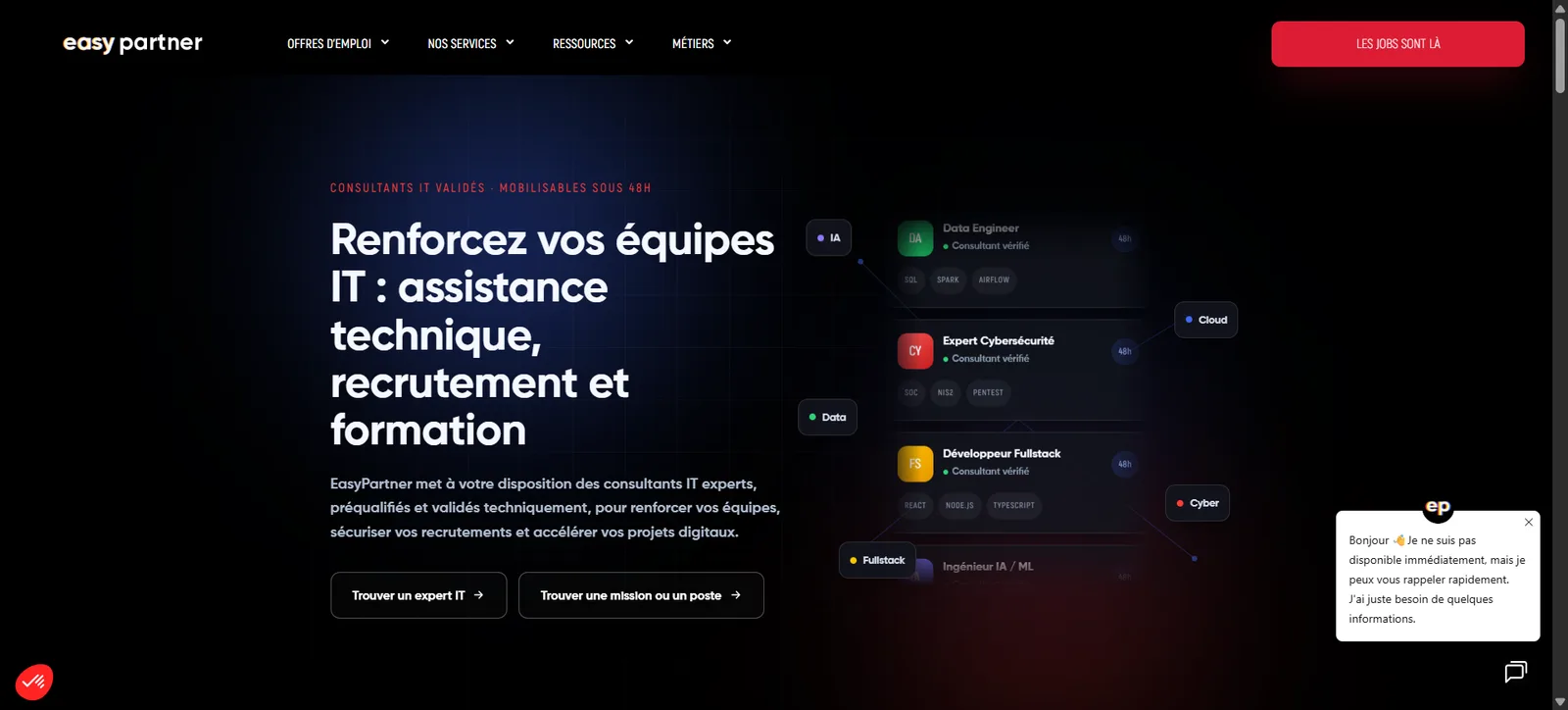
EasyPartner: WordPress/Elementor Rebuild and Custom HubSpot API Integration
A fullstack rebuild of a legacy WordPress site onto a maintainable Hello Elementor base, migration from the Bullhorn CRM to HubSpot, and a rebuilt SEO architecture (internal linking, keyword cannibalization).
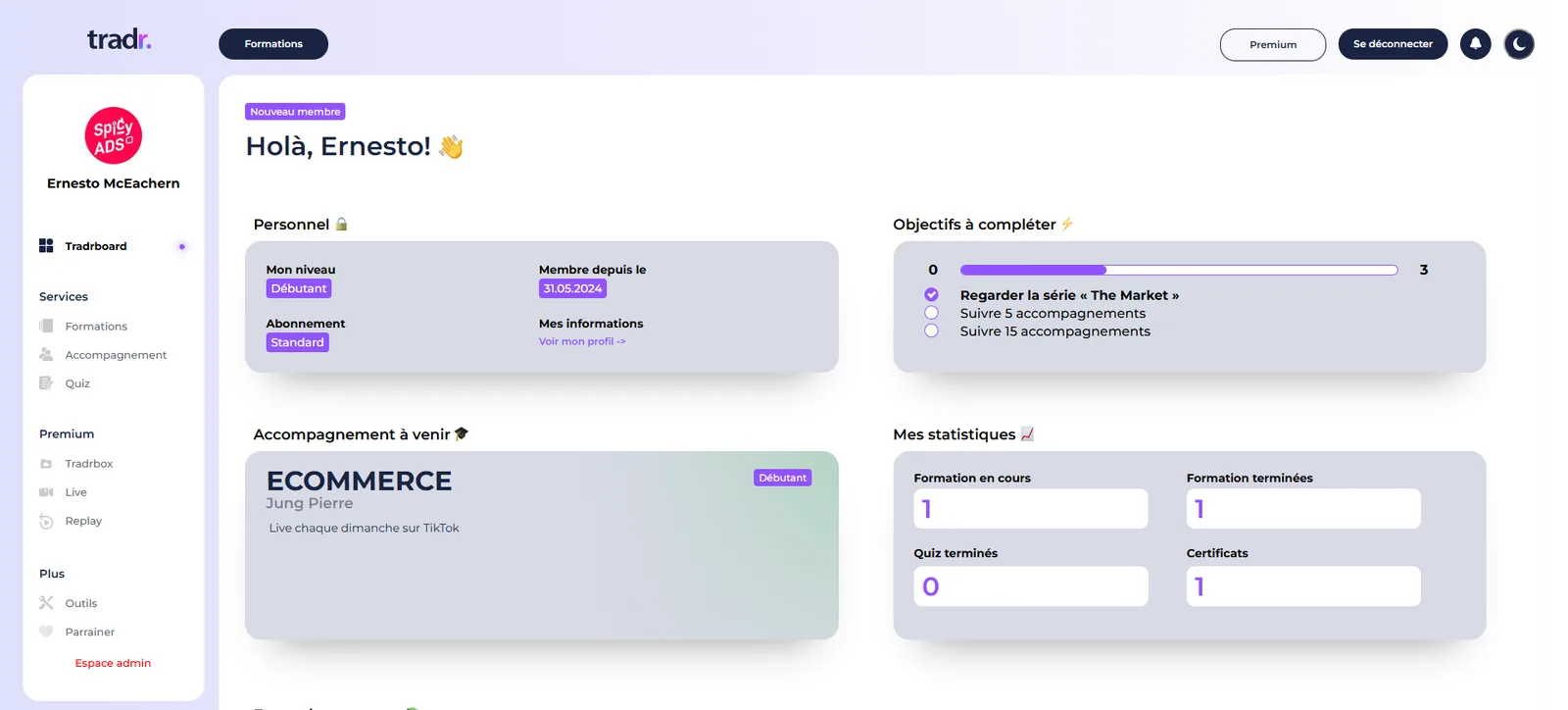
Tradr: Online Training SaaS, for Trainers and Participants
A multi-organization SaaS platform for online training management, bringing together a trainer space, a participant space, live coaching, quizzes and progress tracking in a single tool.
Frequently asked questions
What does a freelance back-end developer do?
A freelance back-end developer is an independent professional who designs everything that runs server-side: database, business logic, APIs, security, integrations. It's the part invisible to the end user, yet it determines an application's reliability, security and ability to scale. Without an agency, you talk directly to the person making the architecture decisions — an important point when those choices are hard to reverse once the project is underway.
What's the difference between a back-end developer and a full-stack developer?
Back-end covers only the server side: database, API, security, business logic. Full-stack adds the front-end (user interface). If your front-end is already covered (in-house team, another provider) or doesn't exist yet, a dedicated back-end developer goes further and faster on the server architecture. I also work front-end — see the front-end developer page — so the right choice depends on what your project actually needs.
How do you choose between Node.js and PHP for a back-end project?
Node.js is a good fit for an API consumed by a JavaScript/React front-end, real-time features (WebSockets), or a high volume of concurrent I/O requests. PHP remains relevant for a WordPress site, integration with an existing PHP system, or a project where the PHP ecosystem (shared hosting, plugins) is already in place. The choice is made during scoping based on the project's actual constraints, not an imposed preference.
How do you secure a database and an API in production?
The baseline is applied every time: prepared statements (never raw SQL concatenation), strict input validation, password hashing, secrets management outside the source code, regular database backups, and rate limiting on sensitive endpoints. The level of security then scales with the sensitivity of the data actually handled — a backend processing payments or personal data gets extra attention from the design phase onward.
My current backend is slow or unstable — can you audit and fix it?
Yes. The audit starts by identifying where the problem actually lies: unindexed SQL queries, no caching, an architecture that can't support the current load, or legacy code with outdated dependencies. Fixes are prioritized by real impact rather than applied at random — there's no point rewriting an entire architecture if the issue comes from two poorly indexed queries.
Do you handle deployment and follow-up after launch?
Yes. Deployment includes server configuration (VPS or cloud), CI/CD where relevant, and logging and alerts to catch production errors before a user reports them. For ongoing support, two formats are possible: one-off intervention as needed, or more regular follow-up if the infrastructure evolves frequently. The technical documentation delivered limits your dependence on me for basic adjustments.
Related services
A backend to design or evolve?
Describe your project and I'll get back to you within 24h with an estimate.