Service
Front-End
Developer
The interface is the only real point of contact between your product and your users. As a freelance front-end developer, I turn your mockups into fast, responsive, accessible React interfaces — ready to connect to any backend.

What I build on the front-end
From mockup to functional interface, with constant attention to performance and accessibility.
React interface integration
Faithful translation of a design (Figma, Adobe XD) into reusable, typed, tested React components. Pixel-perfect without sacrificing performance.
Responsive design & accessibility
Interfaces that work identically from mobile to desktop, keyboard-navigable and screen-reader compatible (WCAG). Not a patch applied after the fact.
Performance & Core Web Vitals
Optimized loading (lazy loading, code splitting, responsive images), smooth rendering, fast interaction times. Measured, not assumed.
Design system & reusable components
A consistent component library (buttons, forms, cards) documented and shared across screens, so the UI isn't reinvented on every page.
Front-end stack
A modern ecosystem, chosen for its production stability and its speed of iteration.


My methodology
Analysis of the mockup, identification of reusable components and the states to cover. Deliverable: screen list and a costed estimate.
The most structural components are built first, validated with you before being generalized across the whole interface.
Screens delivered continuously to a staging environment, tested on mobile and desktop as they're built.
Lighthouse/Core Web Vitals pass, accessibility fixes, component documentation and handover.
Why a freelance front-end developer over an agency?
Faithful to the design, without unnecessary back-and-forth
A single point of contact between the mockup and the shipped code, which cuts the information loss typical of the designer → project manager → developer chain.
Components built to last
A documented, reusable component library — not screens coded in isolation that duplicate the same logic ten times over.
Performance measured, not assumed
Every interface delivered goes through a Core Web Vitals audit before handover — not a separate performance project billed after the fact.
Dual front & back-end expertise
As a back-end developer too, I can define a clear API contract with your team rather than dealing with a poorly scoped integration.
Front-end projects delivered
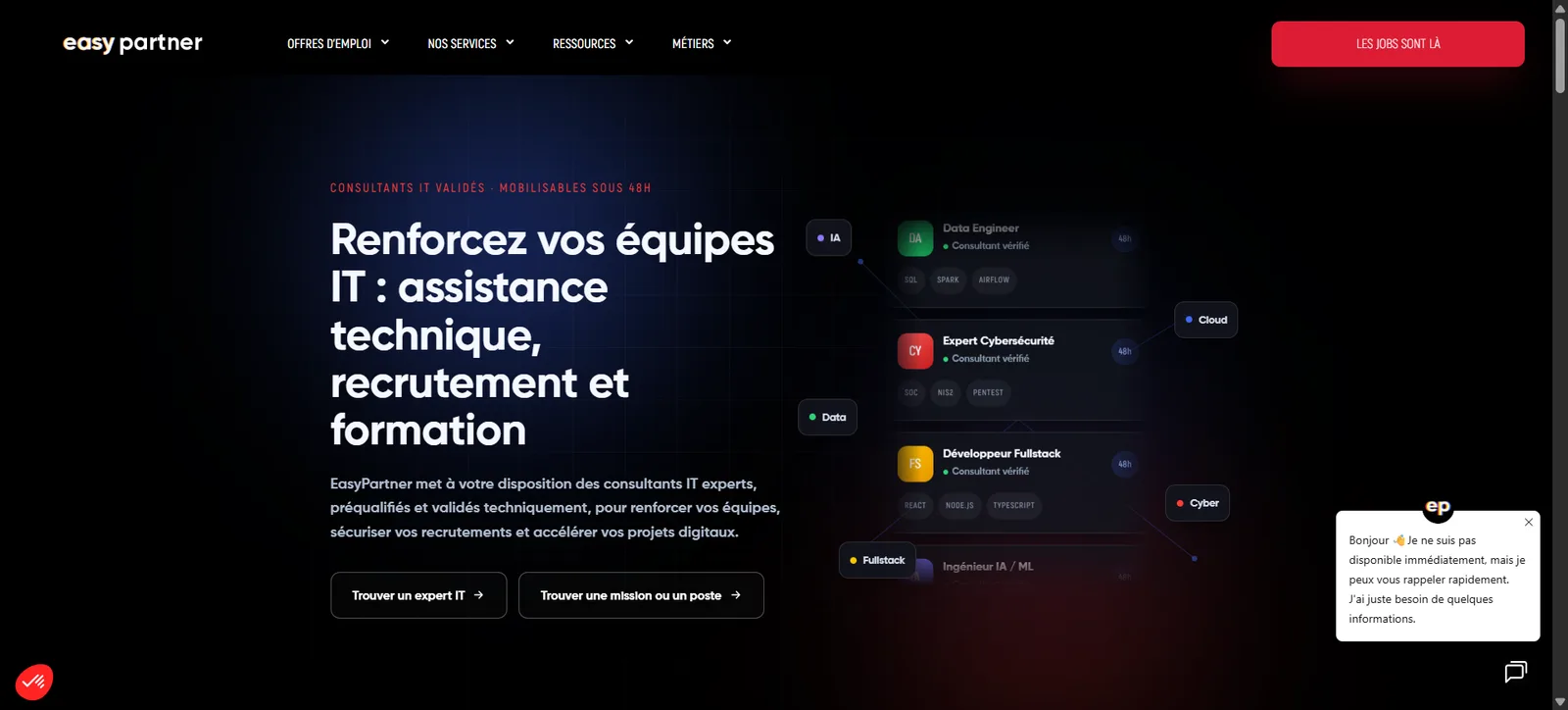
EasyPartner: WordPress/Elementor Rebuild and Custom HubSpot API Integration
A fullstack rebuild of a legacy WordPress site onto a maintainable Hello Elementor base, migration from the Bullhorn CRM to HubSpot, and a rebuilt SEO architecture (internal linking, keyword cannibalization).
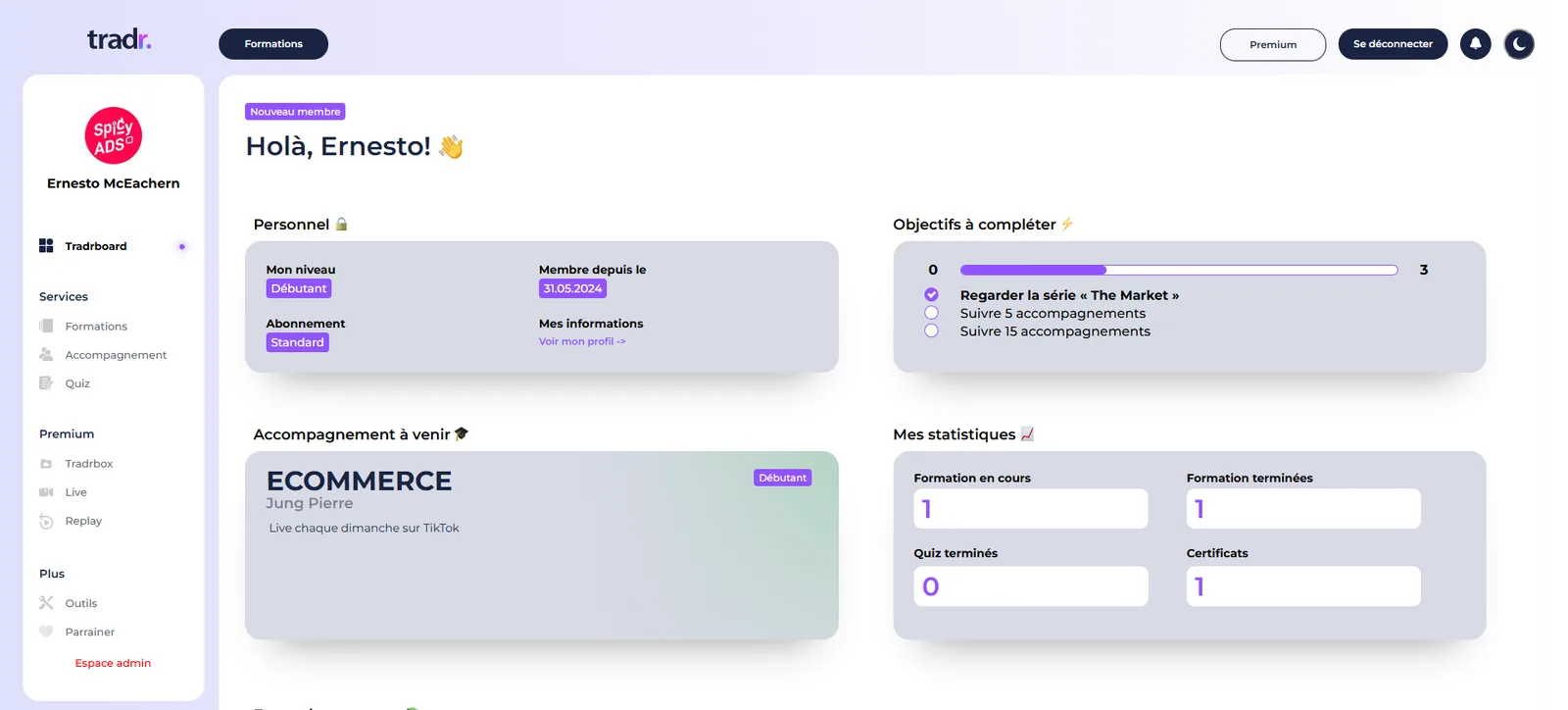
Tradr: Online Training SaaS, for Trainers and Participants
A multi-organization SaaS platform for online training management, bringing together a trainer space, a participant space, live coaching, quizzes and progress tracking in a single tool.
Frequently asked questions
What is a freelance front-end developer?
A freelance front-end developer is an independent professional who handles everything the user sees and interacts with in a browser: HTML structure, CSS styling, JavaScript/React interactivity. They work without an agency, directly with you or your team, often alongside a designer (who supplies the mockups) and a back-end developer (who exposes the API). It's a role centered on faithfully translating a visual intent into a functional, fast, accessible interface.
What's the difference between a front-end developer and a full-stack developer?
Front-end focuses on the interface and browser-side user experience: components, responsiveness, accessibility, perceived performance. Full-stack also covers the back-end (API, database, server logic). For a project where the back-end already exists or is handled by someone else, a dedicated front-end developer moves faster and goes further on the interface, since their time isn't split with the server. I practice both — see also the back-end developer page — so the right choice depends on what your project actually needs.
Can you integrate a Figma mockup as-is?
Yes, with one nuance: a static mockup never covers every real state of an interface (loading, error, empty list, very long or very short content). Part of the integration work is precisely filling those gaps with choices consistent with the existing design, checking in with you or the designer whenever a case isn't covered rather than improvising silently.
How do you handle front-end performance?
Through measurement, not guesswork: a Lighthouse/Core Web Vitals audit upfront, then targeted actions — JavaScript bundle splitting (code splitting), deferred loading of off-screen images and components, reducing unnecessary React re-renders, choosing the right rendering mode (SSR/SSG/CSR) per page. The concrete target is a 90+ Lighthouse score, without it being a separate line item billed after delivery.
Is the front-end you deliver accessible (WCAG)?
The fundamentals are applied by default: semantic HTML structure, compliant color contrast, working keyboard navigation, ARIA attributes on custom interactive components (menus, modals, tabs). Full audited WCAG compliance is a separate undertaking I can quote separately if your context requires it (public sector, a market with a legal obligation), but the basics are never missing from a delivered project.
Can you work with the back-end team already in place at my client or agency?
Yes, that's a common setup. It requires a clear API contract (response format, error handling, pagination) agreed early with the back-end team, so front-end development can move forward without waiting for every endpoint to be finished. I adapt to the stack and conventions already in place rather than imposing my own.
Other services
A front-end interface to build?
Describe your project, I'll get back to you within 24h with an estimate.