Service
Node.js
Developer
Node.js makes it possible to build fast APIs and scalable backends with a single language, from front to back. As a freelance Node.js developer, I handle the design of documented REST APIs, authentication, third-party integrations, and deployment — scoping, development, and going live with a single point of contact.

What I build with Node.js
From a standalone API to the full backend of a SaaS application, with constant attention paid to security and maintainability.
Custom REST APIs
Design of documented REST APIs (OpenAPI/Swagger), versioned and tested. Endpoints built for your React front end, mobile app, or third-party integration.
Authentication & Security
JWT, OAuth 2.0 (Google, GitHub), session and role management. Best practices for securing endpoints and sensitive data.
Third-Party Integrations
Stripe payments, transactional emails, webhooks, CRM, external services. Every integration tested in a sandbox before going live.
Deployment & Monitoring
Production deployment on VPS or cloud, CI/CD, logs and error alerts. A documented codebase, ready to be picked up or extended.
A proven backend stack
Production-proven tools, chosen for their reliability and their ability to scale.


My methodology
Defining resources, endpoints, and business rules together with you. Deliverable: an OpenAPI specification and a firm estimate.
The most sensitive routes (authentication, payment) are built and tested first to validate the architecture before scaling out.
Regular deliveries on a staging environment, with access to up-to-date OpenAPI documentation. You can adjust priorities along the way.
Going live, setting up logs and alerts, technical documentation and handover. Available for post-launch support.
Why a freelance Node.js developer instead of a team?
Fast iteration, without team friction
Scoping, development, and deployment with a single point of contact. No sync meetings, no handoff between back end and front end.
Documented and tested API
Every endpoint delivered with its OpenAPI documentation and tests on the critical paths. Another developer can integrate with it without having to ask you.
Security taken seriously
Robust authentication, input validation, secrets and access management — the basics that prevent unpleasant surprises in production.
Dual back-end & front-end expertise
As a React.js developer too, I can deliver both the API and the interface that consumes it, without bringing in a second provider.
Node.js projects delivered
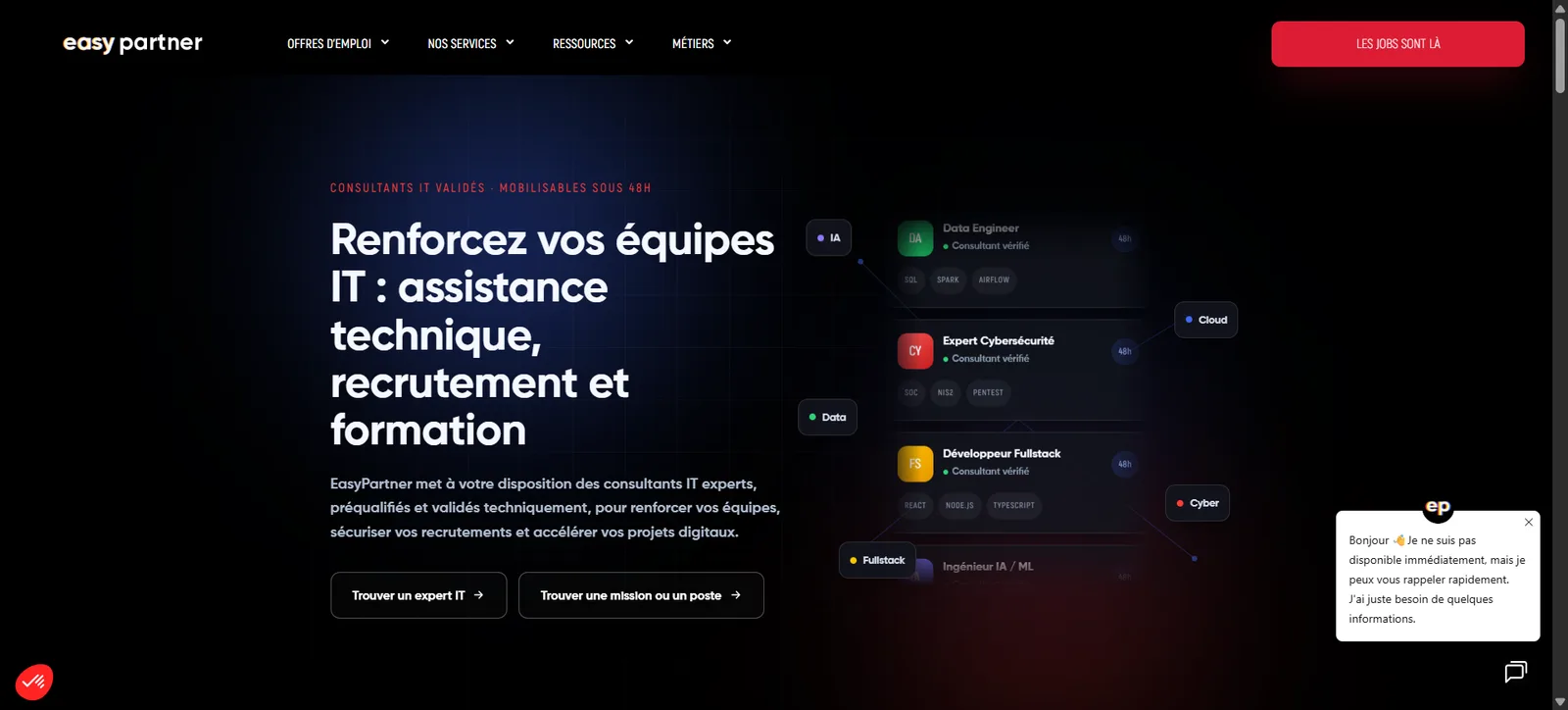
EasyPartner: WordPress/Elementor Rebuild and Custom HubSpot API Integration
A fullstack rebuild of a legacy WordPress site onto a maintainable Hello Elementor base, migration from the Bullhorn CRM to HubSpot, and a rebuilt SEO architecture (internal linking, keyword cannibalization).
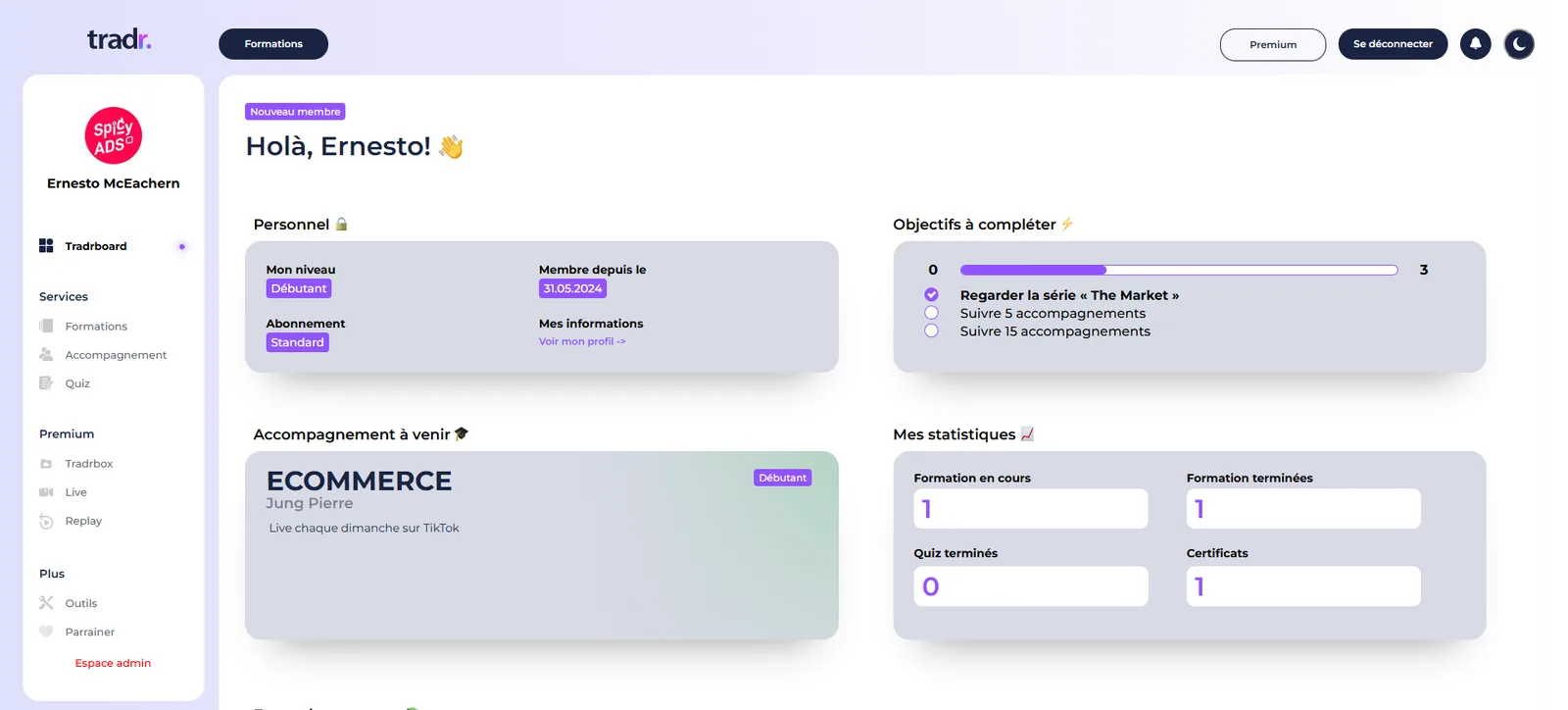
Tradr: Online Training SaaS, for Trainers and Participants
A multi-organization SaaS platform for online training management, bringing together a trainer space, a participant space, live coaching, quizzes and progress tracking in a single tool.
Frequently asked questions
What is a freelance Node.js developer?
A freelance Node.js developer is an independent professional who specializes in backend development in JavaScript/TypeScript, designing and building APIs and server-side services without going through an agency. You talk directly to the person writing the code — no technical project manager rephrasing your requirements between you and the actual developer. For a backend, where architectural choices (API structure, error handling, authentication strategy) determine the security and maintainability of the service, that direct line avoids information getting lost along the way.
Node.js or another backend language (PHP, Python) for my project?
Node.js makes sense when the front end is already in JavaScript/React and you want a single language from front to back, when the application needs real-time features (WebSockets, live notifications), or when concurrent request volume is high with mostly I/O-bound operations (APIs, external calls). PHP remains a solid choice for a WordPress site or an integration with an existing PHP system. Python tends to make more sense for computation or data science needs. This choice is made during scoping, based on the ecosystem already in place and the project's real constraints — not on an imposed technology preference.
How long does it take to build a Node.js API?
A REST API with a handful of CRUD resources and simple authentication generally takes 1 to 3 weeks. A more complete backend with multiple roles, third-party integrations (payment, email) and webhooks takes 3 to 6 weeks. A full SaaS application backend (multi-tenant, billing, fine-grained permissions) takes several weeks to a few months depending on functional complexity. An exact timeline is only estimated after scoping the requirements — endpoints, integrations, and security constraints significantly change the effort involved.
How do you secure a Node.js API?
The systematic basics: strict input validation (never blindly trusting incoming data), JWT or OAuth 2.0 authentication depending on context, password hashing, rate limiting on sensitive endpoints, secrets kept out of the source code (environment variables, never committed), and error logging to detect abuse attempts. The security level is then adjusted to the sensitivity of the data being handled — a backend processing payments or personal data gets extra attention.
Can you take over an existing Node.js API or a legacy backend codebase?
Yes. The handover starts with an audit of the code, the dependencies (often outdated or with known vulnerabilities on an older project), and the endpoint architecture. The goal is to identify what can be kept and what needs to be rethought, without rewriting what already works correctly. For a codebase that's critical in production, changes are introduced gradually with tests on the sensitive paths, rather than in one risky deployment.
Do you offer deployment and maintenance after delivery?
Yes. Deployment includes going live on a VPS or cloud, setting up CI/CD where relevant, and configuring logs and error alerts to monitor the service once it's live. On the maintenance side, two options: a one-off intervention for a bug or new feature, or more regular follow-up if the API evolves frequently. The technical and OpenAPI documentation delivered with the project limits how much you need to rely on me for basic changes.
Other services
A backend or API to build?
Tell me about your project, I'll get back to you within 24h with an estimate.