Service
Custom
Platform
A custom platform stands apart from a showcase website through its functional complexity: user management, its own business logic, integrations, the ability to scale. As a custom platform developer, I handle the whole chain — architecture, database, authentication, API, interface — to deliver a product ready for its first users, with no technical debt.
Types of platforms built
Every platform starts from a specific business need, not a generic template adapted afterward.
Business portal or extranet
A private space for your clients, partners, or teams: account management, documents, workflows specific to your business.
Marketplace & matchmaking
A two-sided platform (providers / seekers) with profiles, search, messaging and payment. Architecture designed to scale.
Custom internal tool
Automating a business process currently run on a spreadsheet or by email: order tracking, scheduling, centralized reporting.
Rebuild of an existing platform
Taking over an aging or poorly architected platform: audit of the existing code, a progressive migration plan, with no service interruption.
Technical stack
A proven stack for platforms that need to hold up over time and support growing usage.


My methodology
Understanding the business process to digitize, modeling the entities and user flows. Deliverable: concise specifications and a per-module estimate.
Stack choice, database structure, authentication and role management settled before the first features.
Regular deliveries to an accessible staging environment, module by module, with feedback integrated continuously.
Deployment, technical documentation and handover. Available for post-launch evolutions, with no dependency on an external team.
Why an independent developer for a complex platform?
Architecture decisions owned by one person
Structuring choices — data modeling, role management, scalability — are made and documented by the person writing the code, with no dilution across multiple people.
Built around your actual process
No generic template adapted after the fact: the platform is modeled from your business logic, not the other way around.
Documented code, no forced lock-in
A readable, documented codebase, delivered with full access. Another developer can pick it up if needed.
One point of contact, from scoping to production
No project manager, no handoff between teams: decisions are made directly with the person building it.
Custom platforms built
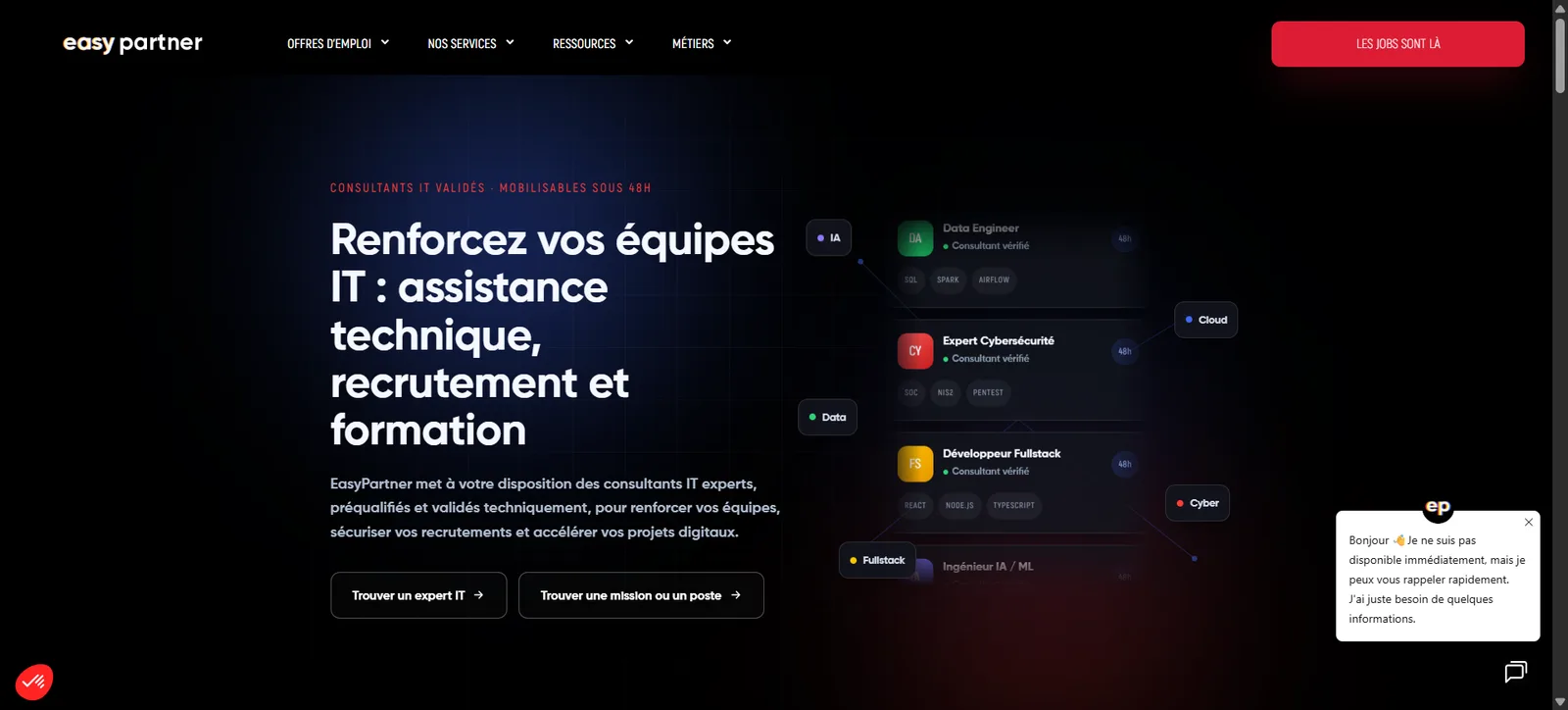
EasyPartner: WordPress/Elementor Rebuild and Custom HubSpot API Integration
A fullstack rebuild of a legacy WordPress site onto a maintainable Hello Elementor base, migration from the Bullhorn CRM to HubSpot, and a rebuilt SEO architecture (internal linking, keyword cannibalization).
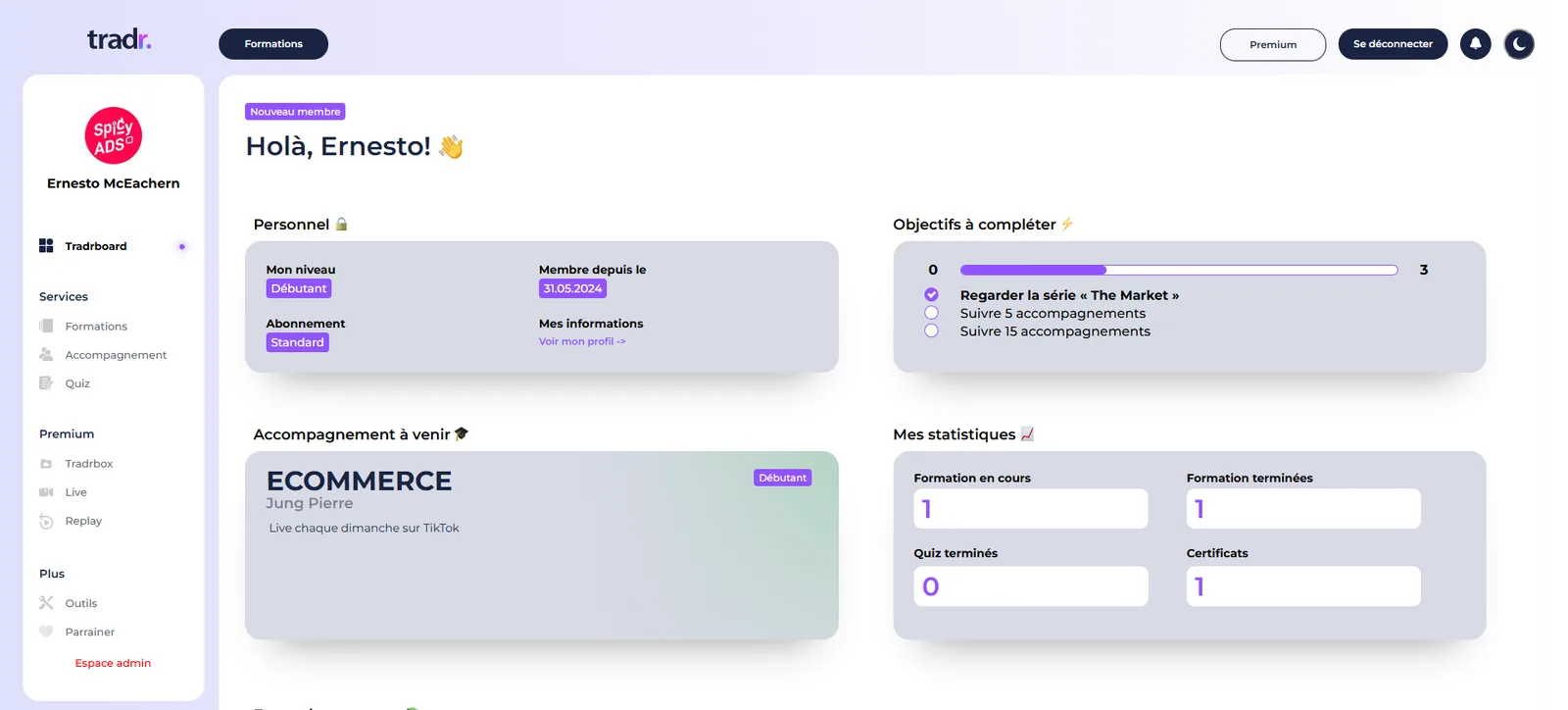
Tradr: Online Training SaaS, for Trainers and Participants
A multi-organization SaaS platform for online training management, bringing together a trainer space, a participant space, live coaching, quizzes and progress tracking in a single tool.
Frequently asked questions
What is a custom platform developer?
A custom platform developer is an independent professional who designs complex web applications — portals, marketplaces, business tools — built around your actual process rather than bent to fit a generic template. Unlike a showcase website, a platform manages users, roles, its own business logic, and often financial flows or third-party integrations. Without an agency in between, you talk directly to the person making the architecture decisions — decisions that are hard to walk back once the project is underway.
What's the difference between a custom platform and a SaaS?
A custom platform is built for a single client, with full code access and full ownership of the product. A SaaS (see the dedicated page) is a single product sold to multiple customers on a subscription basis, with a shared multi-tenant architecture. If you want to sell the same tool to several companies, that's a SaaS. If the tool serves a single business use specific to your organization, that's a custom platform — the distinction gets made during scoping, based on your business model.
How long does it take to build a custom platform?
A simple portal or extranet (account management, a handful of workflows) typically takes 4 to 8 weeks. A two-sided marketplace with search, messaging and payment takes several months depending on the complexity of the interactions between profiles. An internal tool automating a process already in place (spreadsheet, email) can ship faster since the business need is already known and documented. Precise pricing always comes after scoping — integrations and the real business logic move the effort significantly.
How do you handle a platform's ability to scale?
The architecture is designed from the start to absorb growth: database modeling that avoids predictable bottlenecks, a stack choice that scales horizontally when needed, caching placed where it matters. For a marketplace or a tool meant to grow quickly, these choices are documented and explained — not just silently applied — so you understand the trade-offs made and their cost.
Can you take over an existing, poorly architected platform?
Yes. The takeover starts with an audit of the existing code and architecture to identify what can be kept and what needs rethinking. For a live platform with active users, migration happens in documented stages rather than a risky full rewrite — the goal is to never interrupt the service during the transition.
Do you work alone or with a team on this kind of project?
Alone, which means a single point of contact from scoping through to launch, with no handoff or information loss between multiple people. For a project whose scope exceeds what one person can reasonably deliver in the desired timeframe, I say so clearly during scoping rather than underestimating the effort — the priority stays a delivered, working product, not an unrealistic schedule.
Other services
A platform to design?
Describe your project. I'll get back to you within 24h with an architecture and an estimate.